Preferred Pre-Cut Splinting Material Features
Resistance To Stretch –
- Tolerates minimum to moderate resistance to stretch
- Tolerates minimum to moderate handling during splint molding
- Handle on a horizontal plane and form splint in a gravity-assisted position
- Gentle, smooth motions yield superior results
Drape –
- Moderate drape with only light to moderate pressure
- Contours are quick to form
Memory –
- Minimum to moderate memory
- Splints can be modified a few times without thinning
- Requires less handling and maintains contours while cooling
Why to use Preferred Pre-Cut Splinting Material?
Rigidity –
- Molded splints have a moderate rigidity
- A circumferential splint is flexible enough for easy donning and doffing, yet strong enough for immobilization
Exquisite Bonding –
- The unique powder coating gives a tacky feel that helps hold the material in place, without the material pulling or falling away
- The wet bond will hold firmly but can be pulled apart once cooled
- Dry heating two surfaces will form a strong bond
- For a permanent bond, use solvent minimally and dry heat prior to bonding
- Surface Finish
- Moderate resistance to fingerprints and resists showing stains
- Smooth, self-sealing cut edges remain sealed even after reheating
Working Time (1/8″ or 3.2mm)-
- Allows three to five minutes to form and harden after softening in 160° F (71° C) water
When to apply Preferred Pre-cut Splinting Material?
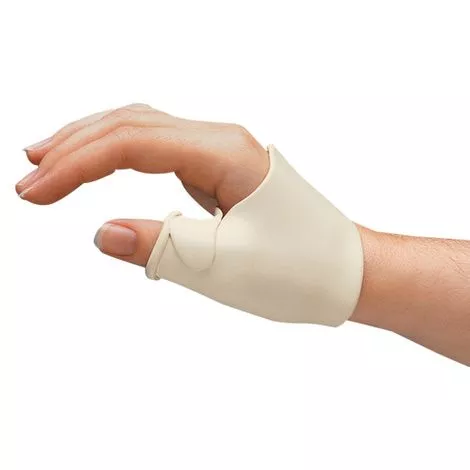
- The 3/32″ or 2.4mm Preferred is thin and lightweight, yet strong, and can be used for forearm and hand-based splints. Ideal for arthritis splints, post-operative splints, and for pediatric splints when children are able to cooperate.
- The 1/8″ or 3.2mm Preferred can be used for almost any splinting application. Use for dynamic and static splinting; for adult and pediatric positioning; and for post-burn and post-surgical care.