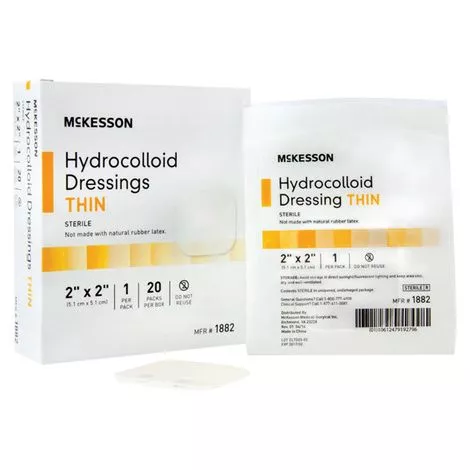
Features of McKesson 1882 Dressing
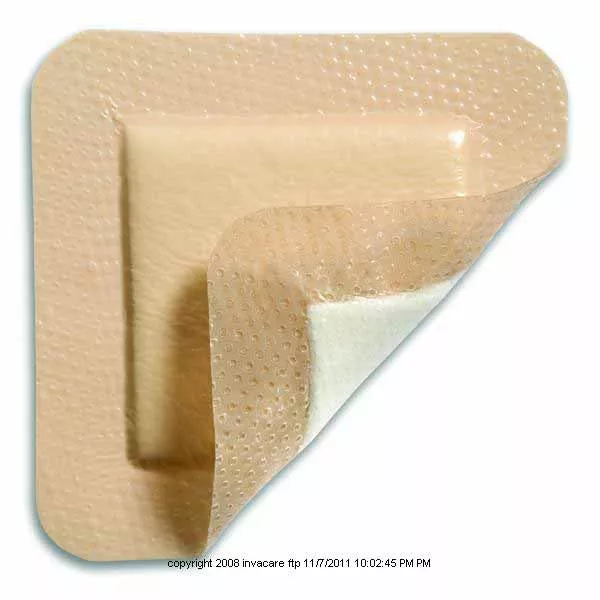
- Low-profile rounded corners and smooth tapered design help reduce edge roll-up and risk of shear and friction
- Helps maintain a moist wound environment to assist in autolytic debridement
- When in contact with wound exudate, the dressing forms a fluid/gel environment over the wound bed
- Mckesson Hydrocolloid Dressing does not break down or leave residue on the wound
- Smooth, tapered design helps prevent edge roll-up
- Cohesive dressing removal system does not break down or leave residue in the wound and facilitates easy removal without tearing the dressing or skin
- Wound contact layer remains intact and minimizes potential wound bed disturbance
- Semi-transparent outer layer permits wound site visualization without removing the dressing
- Thin and Film Back versions feature smooth, tapered designs to help minimize friction and prevent dressing edges from rolling up
- Thin hydrocolloid is semi-transparent, allowing visualization of the wound
- Moisture-resistant backing helps prevent urine, feces, or moisture from penetrating the dressing to reduce the risk of contamination
- Thin and flexible dressing conforms to body contours; adhesion is firm yet gentle to peri-wound skin
- Highly absorbent inner layer effectively removes exudates from the wound and facilitates granulation, epithelization, and autolysis
- Moisture-resistant outer barrier film helps prevent urine, feces, and/or moisture from penetrating the dressing reducing the risk of contamination to the wound
- Up to 7 days of wear time provides an undisturbed moist wound environment, enhances healing, minimizes skin maceration, and reduces the frequency of dressing changes
- Available in multiple shapes and sizes to fit caregiver needs including hard-to-dress areas such as the sacrum, heel, and elbow
- Available with film-backing or foam backing to suit various application needs
- Color: Light Beige
- Shape: Square
- Type: Thin
What to buy with McKesson Hydrocolloid Dressing
- Covidien Xeroform Occlusive Petrolatum Gauze Dressing
- 3M Tegaderm Transparent Film Dressing – Picture Frame Style
- Molnlycke Mepilex Border Self-Adherent Foam Dressing
When to use Hydrocolloid Sterile Thin Dressing?
- Management of partial and full thickness wounds such as leg ulcers and pressure sores.
- Help maintain a moist wound healing environment to assist in autolytic debridement and protect the wound from external contamination.
Contraindications:
- Patients with known hypersensitivities to the components of the dressing or third-degree burns.
- Conditions that lead to the formation of the wound (pressure, venous insufficiency, etc.) must be considered and addressed as part of the total wound care treatment plan.
Change Frequency:
- Dressing change frequency is dependent upon the amount of drainage.
- May be left in place for up to seven days or as directed by a healthcare professional.